 blog
Best Drain Cleaner for Clogged Kitchen Sink: What Works
Last Updated: November 14, 2026
Quick Summary
For a clogged kitchen sink caused by grease, a caustic gel formula is often considered a strong off-the-shelf choice because it clings to pipe walls instead of diluting. For PVC and older metal lines, an enzymatic cleaner is the safer call, and a mechanical snake is safer still.
- Most gels say wait 15 to 30 minutes, while most liquids say 5 to 10.
- Flush with hot water for at least a minute after the cleaner's full wait time.
- Never follow a caustic cleaner with a second chemical cleaner or mix it with an acidic one.
- For garbage disposals, run cold water first, then apply an enzymatic cleaner per the label.
- Call a licensed plumber when water backs up in more than one fixture or a cleaner has failed twice.
Table of Contents
- How to Pick the Best Drain Cleaner for a Clogged Kitchen Sink
- The Best Drain Cleaner for Grease Buildup in a Kitchen Sink
- The Best Drain Cleaner for PVC Pipes and Older Metal Lines
- The Best Drain Cleaner for a Kitchen Sink With a Garbage Disposal
- The Best Drain Cleaner for Slow Drains That Keep Coming Back
- When to Stop Pouring and Call a Licensed Plumber
- Frequently Asked Questions
How to Pick the Best Drain Cleaner for a Clogged Kitchen Sink
Finding the best drain cleaner for a clogged kitchen sink starts with one rule: match the product to what is actually blocking the drain, not the loudest label.
Most kitchen clogs are grease, food scraps, or soap film. Grease is the big one: it cools and sticks to pipe walls, then traps everything else. A cleaner that dissolves fat behaves nothing like one that clears hair, and neither behaves like a mechanical tool.
Below, we break down the three cleaner families, the pipe materials that tolerate them, and the point where pouring more chemicals stops being smart.
Match the Cleaner to the Clog, Not the Label
Read the clog before you read the bottle. Slow draining that never fully stops usually means grease buildup narrowing the pipe. Standing water that won't move at all is a full block, and a liquid cleaner may just sit on top of it.
- Slow drain with gurgling: partial grease or soap film. An enzymatic cleaner has time to work.
- Standing water that drains overnight: soft blockage. A gel formula can cling and break it down.
- Water that won't budge at all: hard block. Mechanical clearing usually wins.
A common mistake is buying a granular formula for a sink that already holds standing water. Granules need water to dissolve and can burn undiluted on contact with skin or a wet surface.
Chemical, Enzymatic, or Mechanical: A Quick Decision Guide
Use this to choose a method in under a minute.
| Method | Best For | Works In | Watch Out For |
|---|---|---|---|
| Caustic chemical cleaner | Grease and soap film, slow drains | Standing water is fine | Heat damage to older pipes, fumes |
| Enzymatic cleaner | Maintenance, recurring grease | Water must drain slowly | Slow acting, needs overnight time |
| Mechanical (plunger, snake, auger) | Hard blocks, food scraps | Any water level | Can scratch soft pipe if forced |
Chemical cleaners rely on caustic ingredients like sodium hydroxide. They work fast and cut grease well but generate heat as they react. Enzymatic cleaners use bacteria to eat organic matter; they are gentler and better for septic systems, but need hours and a drain that still moves. Mechanical tools physically remove the block, which is why a snake or auger is the honest answer when a cleaner fails.
The Best Drain Cleaner for Grease Buildup in a Kitchen Sink
For pure grease buildup, a caustic gel formula is often considered a strong off-the-shelf choice.
Pour the measured amount down the drain, not into a basin full of water, give it the full label wait time, then flush with hot water for at least a minute.
Enzymatic cleaners are often used for long-term grease management. They contain bacterial cultures and enzymes that metabolize fat, protein, and starch into water-soluble byproducts.
Watch out: never follow a caustic cleaner with a second chemical cleaner, and never mix a caustic product with an acidic one.
The Best Drain Cleaner for PVC Pipes and Older Metal Lines
For PVC pipes, a gel or liquid chemical cleaner is generally safe when you follow the label. PVC handles caustic formulas well at normal household temperatures.
Older metal pipes are a different story. Galvanized steel and cast iron corrode from the inside, and a caustic cleaner can finish off pipe that is already thin. For these lines, an enzymatic cleaner is the safer call, and a mechanical snake is safer still.
Pipe compatibility comes down to three checks:
- What material is the visible pipe under the sink?
- Is there any sign of corrosion, flaking, or a past leak?
- Does the label list PVC, metal, or both?
If you can't answer those, don't pour. A licensed plumber can scope the line and tell you what it will tolerate.
The Best Drain Cleaner for a Kitchen Sink With a Garbage Disposal
For a sink with a garbage disposal, an enzymatic cleaner is the best drain cleaner for kitchen sink maintenance because it breaks down food residue without attacking the disposal's rubber seals or metal components.
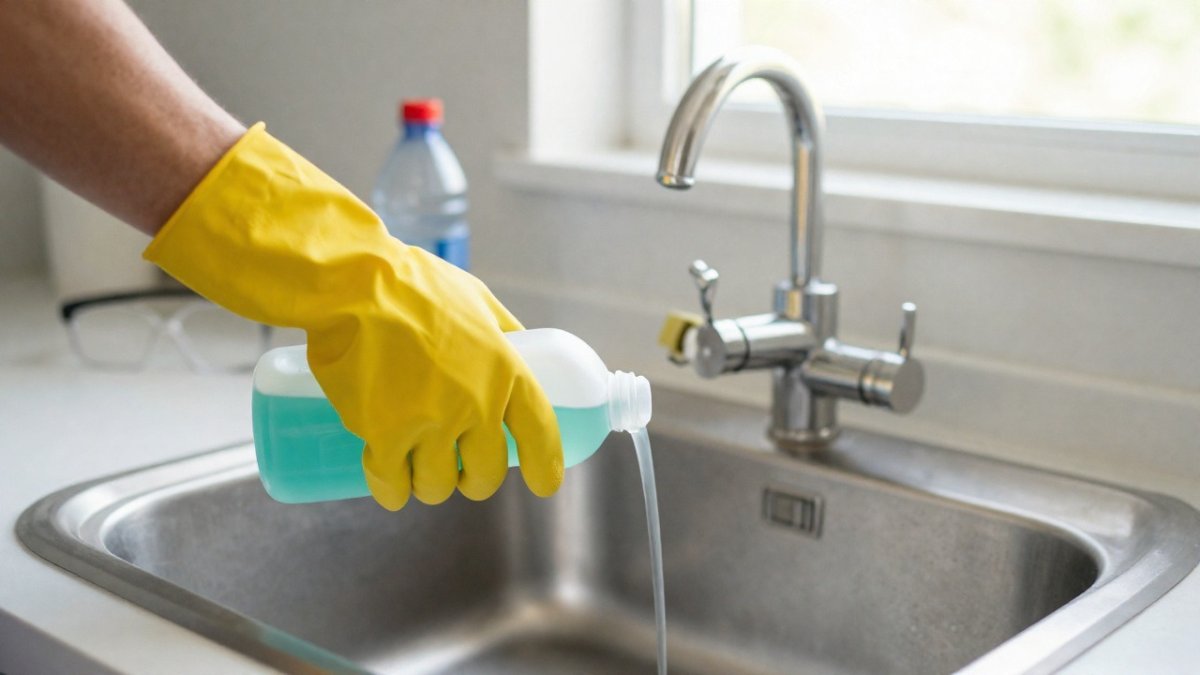
Run the disposal with cold water first to clear loose food scraps, then apply the cleaner and let it sit per the label.
If the disposal hums but won't turn, that's a jam, not a clog. Cut power at the breaker or unplug the unit before reaching in, and use the hex wrench or a plunger from below.
The Best Drain Cleaner for Slow Drains That Keep Coming Back
A slow drain that returns is the clearest sign the blockage was never fully removed. The best drain cleaner for slow drains is an enzymatic product used on a schedule, because it keeps digesting grease film between treatments instead of just punching a hole through it. But the schedule only works if you first confirm the clog is in the trap and not deeper in the line.
Here is how we would handle a recurring slow drain, in order:
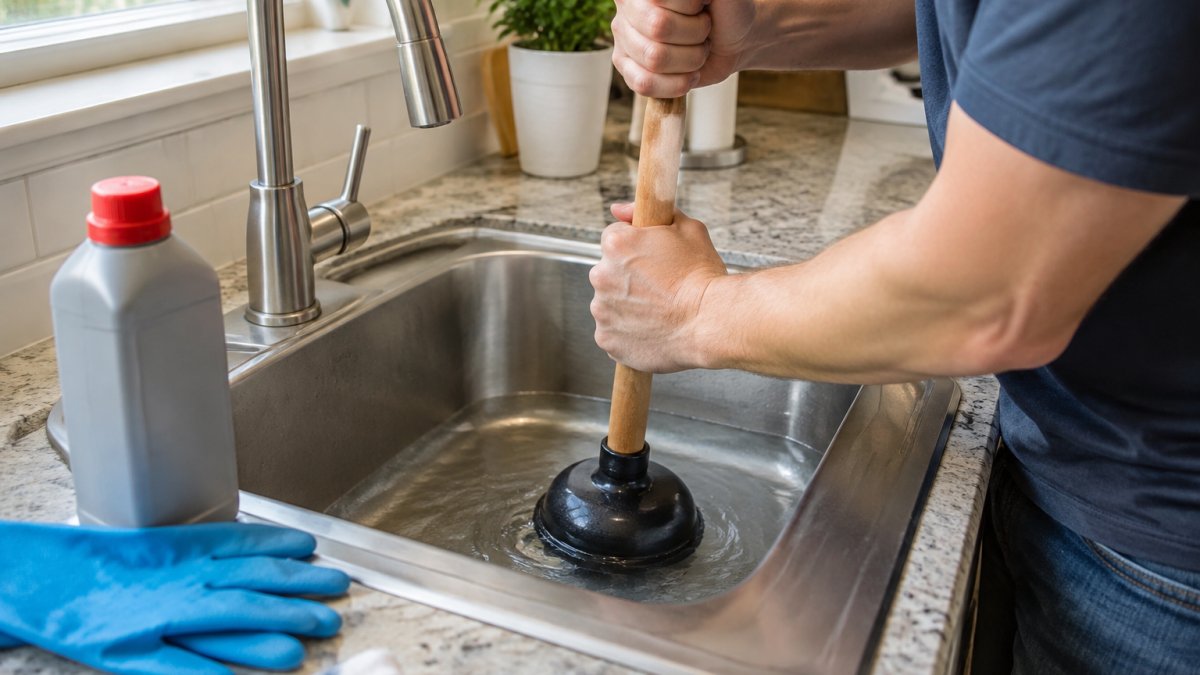
- Clear what you can mechanically with a plunger or short snake. A cup plunger works on a kitchen sink only if you block the second basin or the overflow; otherwise you are pushing air, not water.
- Treat with an enzymatic cleaner overnight, once a week for a month. Dose at the label rate, over-dosing wastes product and can leave a biofilm that feeds the next clog.
- Flush with hot water weekly for a full minute after the drain clears, not just until the water goes down.
- Stop pouring fats down the sink; wipe pans into the trash first. This single habit prevents more recurring kitchen clogs than any product.
When a Cleaner Fails and the Clog Returns
If a cleaner fails twice, stop. The P-trap is the curved section under the sink; it catches debris and is easy to open with a bucket underneath. Here is the safe sequence:
- Put a bucket under the trap and loosen the slip nuts by hand or with channel-lock pliers. If the nuts are seized, stop, forcing them can crack the trap.
- Inspect the trap for grease, food, or a solid plug. Clean it out and reinstall, hand-tight plus a quarter turn.
- Run hot water. If the drain flows freely, the clog was in the trap and you are done.
- If the trap is clear and the drain still backs up, the clog is in the branch line or main. That needs a snake or a camera, not another bottle.
A common pattern in recurring kitchen clogs is grease buildup along a horizontal run, where fat cools on the pipe floor and slowly narrows the bore.
Watch out: do not use a caustic cleaner and then open the trap on the same day. Residual chemical can still be in the trap water and can splash or burn on contact. Flush thoroughly and wait per the label before disassembly, and wear gloves and eye protection.
When to Stop Pouring and Call a Licensed Plumber
Chesser Plumbing Inc provides residential and commercial plumbing, including emergency repairs. With 468 reviews averaging 5.0, Chesser Plumbing Inc aims to provide transparent communication and durable repairs.
If you have poured, plunged, and waited and the sink still won't drain, get a free estimate and let us clear it properly.
A clog that keeps returning is your plumbing telling you something is wrong deeper in the line.
Frequently Asked Questions
What is the fastest way to unclog a kitchen sink drain?
Mechanical methods clear most kitchen clogs fastest. A cup plunger on a sink with standing water often frees a soft food or grease block in a minute or two. If that fails, a hand-cranked drain snake pushed through the P-trap reaches deeper clogs. Chemical and enzymatic cleaners need wait time, from 15 minutes to overnight, before they break down grease or food scraps. Start mechanical, then move to a cleaner, and call a plumber if water still backs up.
Can you use drain cleaner in a kitchen sink with a garbage disposal?
Yes, but choose carefully. Caustic granular formulas generate heat as they dissolve and can damage disposal components and rubber seals. Gel or liquid enzymatic cleaners are gentler and work with the disposal running only after the product has done its job and been flushed with water. Never pour cleaner into a running disposal, and never mix two products. If the disposal hums without draining, the clog may be in the unit itself, which calls for a plumber.
What drain cleaner is safe for PVC pipes?
Enzymatic and bacterial cleaners are the safest choice for PVC pipes because they break down grease and food scraps without heat or corrosive action. Caustic and acidic chemical cleaners can soften PVC over repeated use and damage older joints. If you use a chemical cleaner on PVC, pick a gel formula, follow the label wait time exactly, and flush with plenty of water. Persistent slow drains in PVC lines usually point to buildup further down the run, which a plumber can camera-inspect.
When should you call a plumber instead of using drain cleaner?
Call a licensed plumber when multiple fixtures drain slowly, when water backs up into other rooms, when you smell sewage, or when a cleaner fails twice on the same clog. Repeated clogs in one kitchen sink often mean grease buildup or a partial blockage in the branch line that no bottle cleaner reaches. A plumber can snake or camera the line, clear the blockage at the source, and check the P-trap and disposal for damage before it turns into a larger repair.
